The short answer
Childrens play money for Australian kids and classrooms should look like the money children will actually handle, be clearly labelled, and be sturdy enough to survive a term of shop games. Our Kids Play Money Educational Set is $20.95 and the Classroom Play Money Bulk Pack, enough for 30 students, is $62.95, both with free tracked shipping.
What childrens play money is, and how it differs from prop money
Play money is money made for learning and pretend play. It follows the look of Australian notes closely enough that a child can practise counting, recognising denominations and giving change, but it is not meant to fool anyone and it is not currency. Parents and teachers searching for play money, Australian play money, Australia play money or childrens play money are nearly always looking for a classroom or home-learning tool, not a film prop.
Prop money is a different product. It is made for film, theatre, photography and gifts, and it is reduced-scale replica currency priced per note, which is why our prop notes cost around a dollar each. A set for children has different priorities: it should be easy to sort, clearly labelled, and cheap enough that a lost note does not matter. We keep the two ranges separate so a teacher is never buying a film prop by accident, and so a film buyer is never buying a toy.
Play money Australia: the sets we sell
We sell two products for children, both designed around Australian notes so they learn the denominations they will meet in shops. If you are comparing play money Australia suppliers, these are the details that matter.
The Kids Play Money Educational Set costs $20.95. It is an Australian-currency-styled set for classrooms and pretend play, designed to help children learn to count and recognise note values, and it is clearly marked as play money and not legal tender. It suits one child, a small group or a family shop game at home.
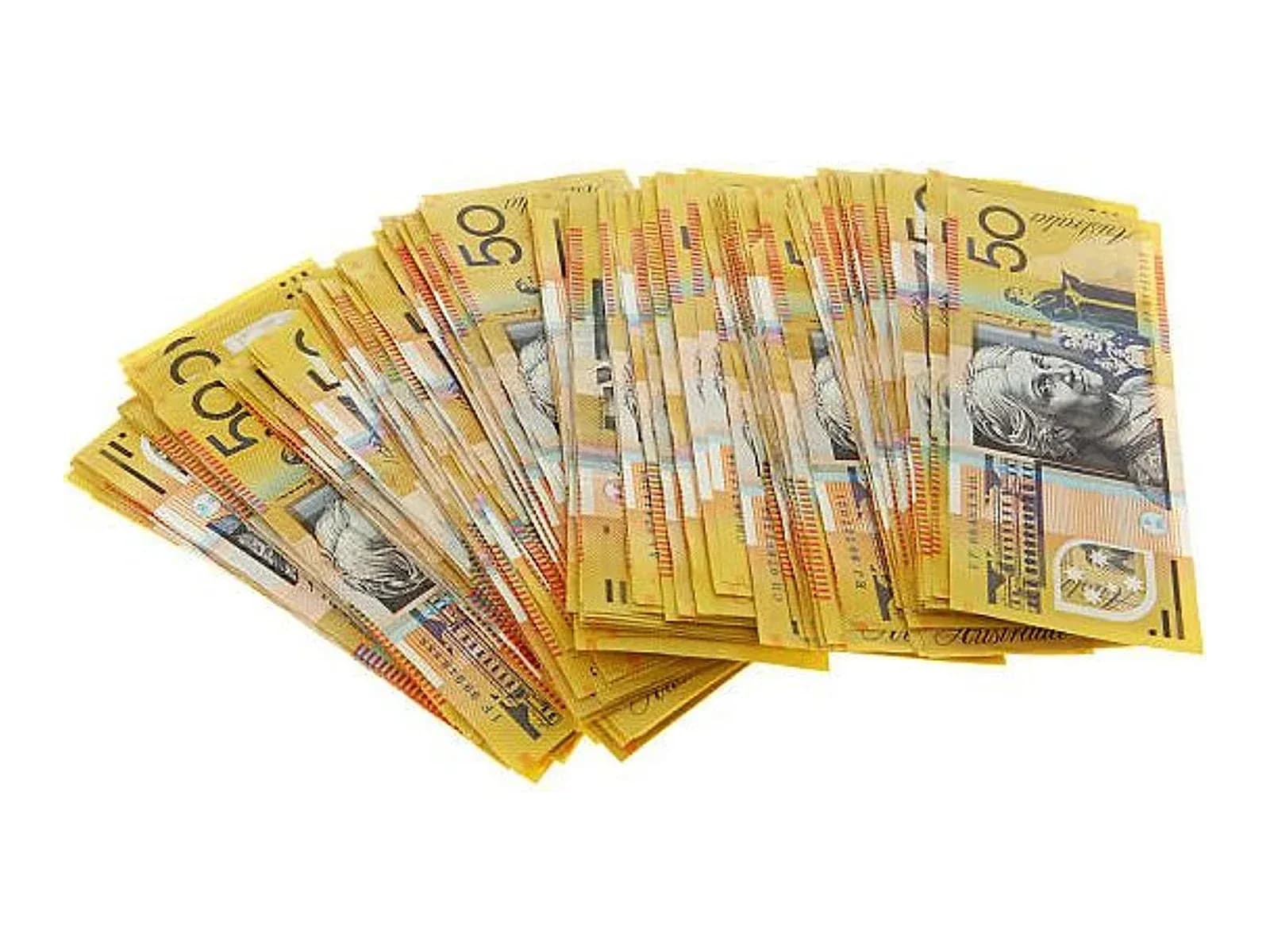
The Classroom Play Money Bulk Pack costs $62.95 and is sized for a full class: enough play money for 30 students, so every child gets their own counting set instead of queueing for a shared tray. At about $2.10 a student, it is the practical choice for a school or tutoring centre.
One thing to know before you order: our minimum order is $350 in goods, and that applies to every order. A single set or classroom pack does not reach it on its own, so schools usually combine it with other items or ask us about a wholesale order through our wholesale page. We would rather tell you now than surprise you at checkout.
Play money activities by age
Matching the activity to the age keeps children interested and stops frustration. These are practical starting points, not a curriculum.
Ages 3 to 5: sorting and colours. Let children sort notes by colour and size and match them to a price tag. The goal is recognition, not arithmetic. Ask "which one is the biggest?" and "which one is red?" before introducing the idea that bigger numbers buy more.
Ages 5 to 7: the corner shop. Set up a table with labelled items priced in whole dollars. One child is the shopkeeper and one is the customer. Start with single notes, then move to paying with two notes, and then to receiving change.
Ages 7 to 10: change and budgets. Give each child a set amount and a shopping list. They must decide what to buy, add up the cost and work out what is left. Introducing a "sale" or a delivery fee makes the maths richer without changing the setup.
Ages 10 and over: banks, wages and saving. Run a class economy in which children earn notes for jobs, pay for class privileges, and save toward a bigger goal. It gives a natural way to talk about wages, saving and what happens when you spend more than you have.
Setting up a classroom shop in 15 minutes
A classroom shop does not need a budget. Gather ten to fifteen everyday items, write a price on a sticky note for each, and put them on a table. Give each student a counting set from the bulk pack and a simple recording sheet to log what they bought. Rotate roles every few minutes so every child spends time as shopkeeper and customer.
Introduce one new rule per session. Week one is just paying the exact amount shown on the tag. Week two adds change. Week three adds a "daily special" that changes the price. By the end of a term, most children are confidently adding, subtracting and estimating, and they have had a lot of fun doing it.
Keep the sets in labelled zip bags or small trays, with one bag per child. Count the notes back at the end of each session, so nothing goes missing and the next class gets a complete set. If a note does get lost or torn, the cost of replacing it is small compared with the value of the lesson.
Teaching real-world money skills with play money
A set of notes works best when it links to the choices children will make with money in daily life. The Australian Government's MoneySmart site has a helpful guide to teaching kids about money, with tips on starting everyday conversations, explaining needs and wants, and letting children practise with small decisions. The notes give you a safe place to rehearse every one of those ideas.
Turn those prompts into short games. For needs versus wants, give each child a small budget and a mixed list, such as a school jumper, a toy and lunch, and ask them to spend on the needs first. For comparing prices, set up two "shops" that sell the same item at different prices and ask which is better value. For saving, offer a toy that costs more than their allowance and let them decide how long to wait.
Printable play money in Australia: what to know
Many parents start by searching for Australian play money printable files, because printing at home feels quick and free. It can work for a one-off game, but there are three things to think about.
The legal side. The Reserve Bank has rules for reproducing banknotes: a physical reproduction must be smaller than three-quarters, or larger than one and a half times, the length and width of the genuine note, and printed on one side only. Read the RBA's page on reproducing banknotes before you print anything that looks like an Australian note. A printable that copies a note at full scale on both sides is not a good idea, however innocent your purpose.
The durability side. Printer paper tears, curls and fades after a few sessions. A set that you cut out on Sunday is a pile of scraps by Friday, and children lose interest when the money falls apart.
The time side. Cutting, sorting and re-cutting printed notes takes longer than the activity itself. A ready-made set removes that work, so lessons start on time.
If you still want to print, search for classroom-made notes that use obviously different designs, not copies of genuine notes. Our sets are produced to be marked as play money, which avoids the issue entirely.
Using a set at home
You do not need a classroom to get value from a set. At home, a Saturday morning shop game takes ten minutes to set up: price a few items from the pantry, give a child a handful of notes and let them buy breakfast ingredients. Children who help with real shopping lists, then practise paying and receiving change in a pretend shop, tend to carry the idea over to the real till more confidently.
Pocket money is another natural link. Pay a small weekly amount in pretend notes first, so a child learns to keep track of what they have before real dollars are involved. When they are ready, you can move to a bank account and the same habits will transfer. The aim is not to replace conversations about money with a game, but to give those conversations something to hold in the hand.
Siblings of different ages can play together, with the older child acting as the bank or shopkeeper and the younger child practising recognition and counting. It keeps both engaged, and it gives the older child a chance to explain what they have already learnt.
How to choose a set for kids
Whichever supplier you use, check these six things before buying.
Clear marking. Every note should be obviously not genuine currency, so a child cannot confuse it with genuine currency, and so nobody tries to spend it.
Australian denominations. Children should learn the notes they will actually meet. A set built around US or generic dollars teaches the wrong colours and values.
Counting capacity. Check that each child gets enough notes to run a shop game. A tiny set limits the activity to showing and naming.
Durability. Look for notes that survive repeated handling. Sturdier notes cost slightly more and last far longer.
Price per student. For a class, divide the pack price by the number of children. Our classroom pack works out at about $2.10 a student.
Delivery and returns. We dispatch within one business day of confirmed payment, and tracked Australia Post delivery usually takes three to five business days at no charge. If an order arrives damaged, misprinted or incorrect, contact us within 14 days of delivery for a replacement or refund, and returns by mail are free.
Watch and learn
If you want a ready-made lesson to pair with the set, the educator channel Learn and Play Online has a short video called Australian Money: Calculating Change that walks children through working out change with Australian notes and coins. Watch it first to check that it suits your age group, then run the same examples with your own notes.
When you are ready to order, start with the Kids Play Money Educational Set for home and small groups, or the Classroom Play Money Bulk Pack for a whole class. For older students who want realistic-looking notes for drama or film projects, our guide to prop money for school and university projects explains the difference.
Related products
Kids Play Money Educational Set
17 × reaches the $350.00 minimum — or mix with other items
Classroom Play Money Bulk Pack
6 × reaches the $350.00 minimum — or mix with other items
Mixed Denomination Starter Pack
$49.0056 notes$0.88 / note
8 × reaches the $350.00 minimum — or mix with other items
Frequently asked questions
What is the best play money for kids in Australia?
The best play money is clearly marked as play money, uses Australian note designs so children learn local denominations, and is sturdy enough for repeated use. Our Kids Play Money Educational Set is $20.95, and the Classroom Play Money Bulk Pack for 30 students is $62.95.
Is Australian play money printable legal?
The RBA says a physical reproduction of a banknote must be smaller than three-quarters, or larger than one and a half times, the genuine note and printed on one side only. Check the RBA page before printing anything that copies a note.
How much play money do I need for a class?
One counting set per child lets everyone run a shop game at once. Our Classroom Play Money Bulk Pack covers 30 students for $62.95, about $2.10 each. Smaller groups can share sets, but individual sets mean more practice time.
What age is play money suitable for?
Children aged three to five can sort notes by colour and size, five to seven can run a corner shop, and seven to ten can work out change. Older students can run a class economy with wages and saving goals.
Can I order play money without meeting the minimum order?
Our minimum order is $350 in goods and applies to every order. A single play money set does not reach it, so schools usually combine it with other items or ask about a wholesale order through our wholesale page.
Topics: printable australian play money · australian money printables play money · printable play money australia · play money printable australia · print off play money